Wednesday, January 13, 2010

Credit Card forward calculate interest

If you have a remaining unpaid balance of $0.01 in your credit card from last month,
and then you use $1,000 this month ...

You may think the interest 18% should be imposed to your 1 cent balance which is ignorable but in actual fact, the interest is calculated based on your future expense as well. So ...

$1,000.01 x 18% -> pro rate to 1 month => $15

See the magic of finance ? You could get charged $15 from your $0.01 remaining balance. Despite your $1,000 usage is not even due yet !

A handful of local banks are already exercising this interest forward calculation method. Most of the international banks on the other hand agree this is ridiculous and didn't enforce this calculation on small remaining amount.

But recently banks lose many credit card accounts so they are quietly imposing this again to upbeat some profits.

Many good card users are caught only after some time because they just couldn't believe such a ridiculous abusing technique can exist around us for more than 2 years already.

When inquired if banks have approval from Bank Negara to do this, a very ambiguous respond is given. Apparently when banks were gaining approval for "multi tier interest", this forward calculation method is part of the small clauses. It is unknown if BNM was just being sloppy or they just quietly pass it through.

Either way, you should have another proof that the big guys will NEVER take care of your personal finance.


Monday, January 11, 2010

Different types of retirements


There are many ways to retire. Some are easier than others. And some still think there is no way they can retire at all :)

There are 2 main factors in retirement;

1. IN : how much do you have and
2. OUT : how much will you use during your retirement

So naturally if you have more IN than OUT then you can retire.

One of the ways is to calculate how much your OUT would be and then accumulate IN as fast as possible. You may have read that its rather simple for a single woman to retire at young age.

There are 2 main influence on the figure OUT;

1. if you live a luxury life, it may take longer to retire ... if ever ...
2. if you live frugally, you may retire sooner.

Some may think they live frugally but actually they may have been spending more than they should. A good way to quantify your OUT is to look at how you have been expensing for the past 10 years. It would most likely be how you will spend in future. The way we use our money is deeply embed in our subconscious. Its easier to discover it than to change it.

Once you have figured out how much you need to retire, you can work on the IN part. There are 2 ways to accumulate your IN;

1. Lump sum : save as much as possible until you reach the same amount as OUT, then retire.
2. Passive income : find a way to consistently receive your IN in smaller amount but continuously without doing much.

Now the key of successful retirement is you will need BOTH ways to accumulate your IN. Simply put, keep your day time job and start learning and building your passive income at the same time.

Problems come when some focus only on one Lump Sum to achieve retirement but a sudden expense surge in future may kick them out of their retirement. Some others only aim at luxury goals by only pursuing passive incomes neglecting the use of Lump Sum Saving method as a backup plan.

Saturday, January 9, 2010

Some data on Malaysia Property

First of all, Malaysia property is one of the cheapest in the region ... so smaller foreign property investors ( less than 10 millions) who are interested in this region may be interested in us.

Our rent is also low ... so its rather easy to rent a place and start business here. So this means its rather easy to rent out your property ... especially if you explore with foreign business men.

The interesting part is our rental yield is quite high at 8.86%. This is actually common in developing countries. This ... however ... will go down in years to come.


This one is similar to rental yield but just shown in a reverse manner. This means you will get back your total investment rather fast in Malaysia.


The cost of both buying and selling is low too. But this usually subject to other terms and conditions like different fee imposed on different sale period.


In the past 5 years, Malaysia property has risen more than 14%

But the whole of last year is almost stagnant.

Thursday, January 7, 2010

New Sabah Property : HOT !


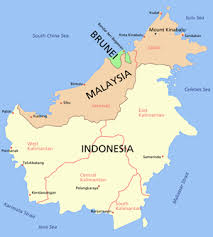
Famous Feng Shui sifu said that new sabah property is going to continue to be HOT for the next 20 years. As a matter of fact, he refers to both Sabah and Sarawak. Some may have already seen that properties development have been on the rise in East Malaysia for some time now especially in Kota Kinabalu, capital of Sabah.

Although there have been critics that such a trend has no sustainable growth and therefore they considered it a bubble rather than a living standard up scale.

However it doesn't really matter how right they may be or how noble you are, the market doesn't really care. If it continues to have more buyers than sellers then the price will continue to trend up, despite anything else i.e. no one actually utilize those properties.


It shouldn't be too hard to understand the rise. First of all, Borneo is an island. Island has limited land. So 'eventually' the price of land will rise. Its been proven in Japan, Hong Kong Island, Singapore and even Australia ( a continent but nevertheless an island geographically). And its not just any island, its the 3rd largest island in the world. Imagine you can fit 1,000 Sinagpore in Borneo !!

But not all islands have great track record. The largest island in the world - Greenland - doesn't do so well, most of the very small one man islands do not do well neither. Is Borneo too big or could it be just nice ? New Guinea (2nd largest island) and Madagascar (4th) are both not that encouraging. The list continues down until Great Britain, the 8th largest island who obviously did pretty well in property growth. Limited land of an island may be a good starting point but other deciding factors seem to be more influential.


What other positive notes do we have ? Politics movement is good for Sabah property. As a matter of fact, due to Malaysia politics instability, the paying master political party has to move to East Malaysia. Whether or not you need houses, more will be built. How do they justify building more ? They will get buyers if you don't. Property trend is a developer's game. If they have the power to sustain selling price during bad time, the only thing left is up trend.

20 more years of HOT property growth is a surprisingly SHORT period given that it is a land of more than 700,000 square kilometers. So this prediction is actually an insult to those who truly love Sabah. The only reason why it can be hot for another 20 years is because outsiders will come in to Borneo, harvest out all the benefits and then leave. If they don't leave in 20 years time, they will start to pay just like the permanents. Where the business and finance ecology have been exploited, not to mention the environment.

How can we grow Borneo's property and leave a long term positive effect ?

1. Create MORE forestry reserve lands. this makes sure land is really limited.
2. Focus on ONE main theme - it should be along the nature's line ...
3. Form environmental alliance among Brunei, East Malaysia and Kalimantan.
4. This alliance has authoritative power over real estate development.
5. Beef up sea lines transport, bring in the industries

Then all the other developments can follow suit ...

So do we need that coal plant ? Well, I hate to ... but we do need to address the problem of water and power supply first.

If Borneo can be made into an eco-self-sustain-island, it can be the Eden for human races. Not only property will continue to rise forever but it could also be our last hope ...

And to iron out the whole architectural solutions in the next 5 years, we will need USD 20 billions now.

Wednesday, January 6, 2010

The Role of Businessmen In Shaping Events

On Sunday, The New York Times had a long article on Sandy Weill. It was the vintage Times P.R. piece, including hyped style to give the story a Homeric or Shakespearean dimension. The man who rose from a humble childhood to build Citi to a powerhouse had it all, got humiliated, now is sad, hurt, lonely, unwanted; “There is no creature loves me” stuff. He is still “baronially wealthy” (of course); he wants to be remembered for his charity work.

Sandy Weill is an easy mark for mockery. But we should resist the temptation, first, because his vulnerability makes mocking him improper, almost obscene, like an intellectual equivalent of dwarf tossing. More importantly, jesting distracts us from the larger question of the role of businessmen in shaping the events which his story can help us explore. The issue is defined in the contrasting views expressed in the article:
Though he [Weill] was once viewed as a brilliant deal-maker, some critics now cast him as the architect of a shoddily constructed, unmanageable financial supermarket … “The dream, the mirage has always been the global supermarket, but the reality is that it was a shopping mall,” says [a critic]…

Mr. Weill vigorously defends his record, rebutting critics who say that Citi was an unstable creation. [A friend] who worked with Mr. Weill on his autobiography, said that Citi’s problem wasn’t that it was unmanageable, but that it lacked enough good managers… “Had he picked a different successor things could have turned out very differently,” [he said].
Is the friend right? Was it a matter of one mistake – choosing a wrong successor – which brought Citi to its knees? Or was the fall pre-ordained, the seeds of the failure planted by what had come before?

The premise that with a better person at the helm, things could have turned out differently is intuitively appealing because it is within the realm of possibilities. We could have won last month's lottery if we had chosen the winning numbers, you know.

But the analogy is false. The lottery example is from the inanimate world where relations are fixed and therefore, have no context; they are memoryless, in the jargon of mathematicians, meaning that what happened in the past has no bearing on the future.

The fate of Citi after Weill is in the realm of finance, which is the realm of social (because value is a social concept). In this realm, all actions have their roots in the past. Nothing exists out of context, including the character of personalities.

What was the context, the milieu, in which Sandy Weill chose his successor?

The article had all the clues for the looking:
“This is my final annual meeting as chairman,” says Sandy Weill, standing near the window of his office, peering at a grainy photograph of him and his wife on stage at Carnegie Hall more than three years ago. They are smiling broadly, and behind them is a packed house of cheering Citigroup shareholders. A huge banner dangling from the balcony reads “Thank You Sandy.” On that day, April 18, 2006, Citi’s share price was $48.48.
Like the witches in the opening scene of Macbeth, the stock price in the opening paragraph of the story sets the stage for what is to come. But unlike the witches, the stock price in the Sandy Weill story does not go away. It hovers over and drives the narrative.
Mr. Weill firmly contends that what he built at Citigroup created huge value for employees and shareholders.
Even after retirement:
Mr. Weill continued to track it [stock price] closely. “He was watching every movement of the stock; he was reading everything,” recalls Mike Masin, a longtime friend and a former chief operating officer of Citigroup. “We have had conversations about the fact that he has to make Citi less a part of his life.”
Mr. Masin does not know his longtime friend well enough. It was not Citi with which Sandy Weill was obsessed. It was money. The bank and its stock were mere proxies towards which the obsession was channeled. This, Sandy Weill tells us himself, though, without realizing:
He [Weill] has raised $950 million for Weill Cornell’s $1.3 billion fund-raising campaign and recently put together a $110 million bond offering for Carnegie Hall. “It was like being back in business again,” he says. “I get the same kind of kick by getting somebody to make a major charitable contribution. It’s the same kind of adrenaline rush.”
Functionally, fund raising on behalf of charities and running a financial conglomerate are two entirely different things. But they have one commonality, namely, money. It is money which gives Sandy Weill a “kick”, “an adrenaline rush”, just “like being back in the business again”. For Freud, money was “laughing gas”. For Sandy Weill, it is crack. The man is the embodiment, the personification, of the “rational man” of economic textbooks who always “prefers more to less”. When the subject of the desire is a commodity, as in the old economic textbooks, there is a limit to the desire. Hence, the “decreasing marginal utility” concept: the second Rolls Royce would be slightly less satisfactory than the first one. And there is a limit to the number of hamburgers one could eat. (Again, economics textbooks example).

In finance, the subject is money. Money has no decreasing marginal utility. The second dollar is as valuable as the first, perhaps more. So the pursuit of money does not – cannot – stop. In the narrative of Weill's life story, money has the same role that sex has in “120 Days of Sodom”.

But how do you constantly get more money? How could you make the stock price constantly go up – deliver “value to the shareholder”? A medium size financial company's normal return would not do the trick. The only way to go is through acquisition.

Enter Sandy Weill as a “brilliant deal maker”. The P.R. angle aside, the Times description is accurate. The man created a financial behemoth with 200,000 workers and almost $2 trillion in assets. That required buying, appending, acquiring with a religious zeal. Such deals are complicated, time-consuming, exhausting. Imagine the amount time of money spent on lobbying for the repeal of a major piece of legislation such as Glass-Steagall, which made the merger of Travelers and Citibank possible.
On another wall [in Weill’s office] hangs a hunk of wood — at least 4 feet wide — etched with his portrait and the words “The Shatterer of Glass-Steagall.” The memento is a reference to the repeal in 1999 of Depression-era legislation; the repeal overturned core financial regulations, allowed for the creation of Citi and helped feed the Wall Street boom.
Weill had to be good at what he did. He could easily be the best deal-maker alive – second best, if you counted the dead.

How does a man like Weill choose a successor?

The successor had to continue the legacy, he had to keep the flame alive. That was the requirement which trumped all other considerations. The successor could not let the shareholders, Weill himself the most prominent among them, down.
He no longer had any official position at Citigroup, having retired as chief executive in 2003 and as chairman in 2006. But he was still hugely invested in the company. He owned more than 16 million shares in 2006.
Look. Sandy has just retired. The stock closed at $48.48. There are these structured finance instruments – lawyers call them special purpose vehicles -- through which you could borrow at under 3% and lend through the CDOs to mortgage holders at 6%. It is an incredibly profitable business, guaranteed to boost the stock price. What do you say to that Mr. New CEO?

No successor to Weill could ignore or oppose that pitch, not with the constant pressure to boost the stock price. The choice had to be a Chuck Prince.

And so it was. Prince’s much ridiculed comments about the CDO market that, “When the music stops, in terms of liquidity, things will be complicated. But as long as the music is playing, you’ve got to get up and dance. We’re still dancing” was the accurate description of his mission statement. Citi stock went from $48.48 to $55 and change before the crash came.

What about a good “manager”, a good “executive”, of the kind who could manage the disparate business lines that Weill had accumulated under the Citi umbrella? That was impossible. Weill could not know such person. He would not know a good manager if one kicked him in the teeth. A good manager would not get past Weill's first secretary. He would not get pass Weill’s doorman.

That is because such “manager” would be a relic of the past, an organizational man from the 50's. The idealized manager, of the kind wished for in the Times article belongs a more serene time, when the business tempo was “calm” because it was set by the predictable turnover of the industrial capital. So the GM’s five disparate car divisions – Pontiac, Buick, Cadillac, Chevrolet, Oldsmobile – plus its military wings and other divisions – far more diverse than anything Sandy Weill could put together – could be successfully managed.

At the age of speculative capital, which generates profit not from production but from price volatility, there can be no managers in the old mold. They have to be replaced by the deal-makers of Weill’s stripes. Witness how fast John Reed was gotten rid of. I am not sure what his managerial credentials were, but as an M.I.T. trained engineer, he was not a deal maker. And that was sufficient for his undoing:
In November, Mr. Weill’s former co-C.E.O. at Citi, John Reed, told Bloomberg News that he was sorry for his role in helping to end Glass-Steagall. When asked about Mr. Reed’s apology, Mr. Weill says: “I don’t agree at all.” Such differences, he says, were “part of our problem.”
Sandy Weill no doubt wonders what this fool Reed could be thinking, regretting the repeal of a law that stood in the way of making more money.

Could Sandy Weill have picked another person, a more “competent” manager?

The answer is No, he could not have. He could have, only under conditions that Rumi, as usual having the last word, said an impossible would be possible:

If it were to be possible for the life to go on without you, then the world had to be upside down.

For Sandy Weill to have picked a different successor, the deregulation must not have happened, Glass-Steagall must have remained intact, Citi must have not have become a behemoth, the CDO market must not have been created which means, ultimately, that Sandy Weill himself must not have existed.

So, you see, Mr. Weill, everything was, in a sense, pre-ordained. For the cause of what you see around yourself, may I suggest consulting a mirror?

But that in no way means that I blame you for what happened. I know that like Oedipus, your deeds were inflicted upon you rather than committed by you. And unlike Oedipus, you managed to put away a nice little something from which you could enrich New York’s cultural institutions. That’s the stuff philanthropies are made of!

Is that the fate of all men, then, ultimately being crushed by events, hoping at best to be remembered by their charitable givings, like a society lady?

The answer is, no. Historical personalities fare better because they know the direction of the movement of history and align themselves with it. At times, they even move ahead of the events. The awareness and the will to act on it distinguish the historical figures from the businessmen.

The subject of this blog is precisely the march of history as it manifests itself in the realm of finance.

Sunday, January 3, 2010

The Driver of Social Change (1 of 2)

In developing the characteristics of speculative capital, I wrote in Vol. 1:
Speculative capital is, by definition, opportunistic. It is constantly on the lookout for “inefficiencies” across markets which it can arbitrage. The opportunities arise suddenly, so the capital that hopes to exploit them must always be available; it cannot afford to be locked into long-term commitments. The requirement to be opportunistic translates into the need to be mobile, to be nomadic and interested in short-term ventures. Such are the inherent attributes of speculative capital.
Then added:
Because these attributes define speculative capital, the manager of speculative capital must employ it in activities that are consistent with these attributes. This rigidly defined role turns him from being a manager of speculative capital into its agent, someone who nominally “runs” the speculative capital but must in fact follow its “agenda.” Speculative capital becomes the grammatical subject of the sentence as if it were alive.
In addition to traders who act on its behalf, capital also has agents who speak on its behalf. These agents are a curious mix of dissembling advocates and ventriloquist dummies. Their advocacy is unconditional but indirect, as if to throw off the scent. Yet, they are unaware of the role and influence of their ever-present “client” and speak of their “free will” in earnest. That is how they are dissembling advocates and ventriloquist dummies; knaves and fools in equal parts.

Observe, if you will, Prof. Gary Becker of University of Chicago. He is commenting on the U.S. economy in The Wall Street Journal of Dec. 21:
Productivity has gone very well actually throughout the decade, even during recession. That’s an excellent sign for the economy, if that can continue … The thing that concerns me is whether we are getting too much regulation and social engineering in the next few years. I would be concerned about that as a possible factor that is putting brakes on the growth of the economy.
Now, return and read these comments again, this time substituting “capital” for “I”, “me” and “economy”.

The substitution clarifies the professor's comments and eliminates the seeming contradiction implied by “even during recession”. This is how it appears to me, with my thoughts automatically appending themselves to the text in brackets:
The productivity [that is, workers producing more with the same or lower wages and salaries,] has gone very well actually throughout the decade. [It is not surprising that this has taken place] even during recession. [In fact, it is precisely during a recession that workers can be made to produce more with less.] That’s an excellent sign for [the further accumulation of] capital, if that can continue. The thing that concerns capital is whether we [i.e., the sum total of capitals] are getting too much regulation and social engineering in the next few years. Capital would be concerned about that as a possible factor that is putting brakes on the growth of the capital.
There is no reference to people, either explicitly or implicitly; productivity and recession are mentioned in the same vein one might describe good air quality or bad weather – or the sighting of a black swan. And Prof. Becker is the winner of the 1992 Nobel Prize in economics “for having extended the domain of microeconomics analysis to a wide range of human behavior and interaction”.

I am not writing to criticize the good professor's language. His is the standard language of economics and finance professors everywhere. What I want to focus on here is social engineering. Prof. Becker does not like social engineering because it puts “brakes on the growth of the economy”. By the same token, he does not like regulation because it is the agent of social engineering. His ideal society, we can surmise, is one where the “economy” grows “naturally”, without any regulatory burden or interference.

Prof. Becker is correct in associating regulation with social engineering. Social engineering is consciously influencing and altering the course of the development of the society. It is the attempt by men to direct the social and economic forces towards a definite end. To the extent that regulation is aligned with that goal, it can be the agent of social engineering.

But Prof. Becker is fundamentally wrong in believing that the absence of regulation is synonymous with the “natural” economy or society. There is no such thing as natural economy, no matter how primitive the society. And there is no such thing as the absence of the regulation, only that law and regulation favoring the dominant force in the society are enacted at such tectonic scale and fine level of technicality that they are all but invisible to the general populace – and economics professors. What is the deregulation on whose behalf Prof. Becker and his colleagues have been the most tireless cheerleaders for the past 35 years if not the most brazen attempt in social engineering undertaken on behalf of speculative capital?

I devoted a full chapter in Vol. 1 to the way speculative capital – the latest and most advanced form of capital in circulation – affects the law and regulation. I wrote:
Speculative capital abhors regulation. Regulations interfere with the cross-market arbitrage that is its lifeline. If speculative capital cannot freely operate, it cannot generate profits and must cease to exist. The opposition of speculative capital to regulation is thus not a matter of some technical or tactical disagreement but a question of life and death.

The attack of speculative capital on regulation is not indiscriminate. Speculative capital singles out only those regulations which directly or indirectly hinder its free flow across the markets. Meanwhile, it supports and pushes for the passage of sweeping laws that favor its expansion. In so opposing the regulation and supporting the law, speculative capital distinguishes between the two in ways few philosophers of law could.
And the beat goes on. Listen to Bill Gross, the chief investment officer of PIMCO, the largest fixed income fund in the world. He is talking to the New York Times about the impact of near zero interest rates which has forced the traditional savers, always risk-averse, to financing a “second bailout of financial institutions”:
“What the average citizen doesn’t explicitly understand is that a significant part of the government’s plan to repair the financial system and the economy is to pay savers nothing and allow damaged financial institutions to earn a nice, guaranteed spread,” said William H. Gross, co-chief investment officer of the Pacific Investment Management Company, or Pimco. “It’s capitalism, I guess, but it’s not to be applauded.”
The good man is exactly wrong – or expediently pretends not to know – in saying that “it’s capitalism”. It is precisely not capitalism, in the sense of the market forces determining the prices and the rates. If it were, the interest rates would skyrocket in the face of massive debt financing, as they did in the case of the auction-rate securities.

The near-zero interest rate, rather, is the result of sustained interference in the markets by the Federal Reserve in accordance with a deliberate policy set by the Federal Reserve. Prof. Becker does not see that as social engineering, but regardless of his sensitivity to what takes place around him, the effects are there. Look at this reverse mortgage “product” from the same Times article:
Eileen Lurie, 75, is taking out a reverse mortgage to help offset the decline in returns on her investments tied to interest rates ... Such mortgages allow people who are 62 and older to convert equity in their homes into cash tax-free and without any impact on social security or Medicare payments. The loans are repaid after death.
The name itself is interesting. Mortgage and reverse mortgage. Just like repo and reverse repo.

But there is a difference. Repo and reverse repo are transactions in capital markets. Both refer to temporary financing. In repo, you borrow money and post security as collateral. At the end of the term, typically overnight or a week, you pay back what you borrowed (with interest) and receive your collateral. Reverse repo is the reverse. You lend money and get security as collateral.

In reverse mortgage, there is no reversing in the sense of having a second transaction. You receive monthly payments on your house. When you die, the lender gets your house.

Note the reference to tax and Medicare. In the U.S., income is taxable (except for the Maddoff “investors”). Also, in the U.S., income beyond a certain level would disqualify an individual from receiving Medicare, the government run health insurance. Someone has gone through the trouble of introducing legislation to specifically exclude the reverse mortgage payments from the calculation of income. One could always claim that the deed benefits senior citizens. But the law has also made reverse-mortgages enticing to cash strapped senior citizens. It has made the product “salable”. If I were a betting man, I would bet that lobbying for the measure did not come from isolated senior citizens.

A reverse mortgage transforms capital to money. A house is capital by virtue of its capacity to generate rent. That is why its price increases over time. The money received as part of the value of the house and spent on say, food and medicine, is wealth (capital) converted to money. So whilst previously a working man could dream the American dream of owning a house and perhaps leaving it to his children, now he must hand it over in return for sustenance. That is a curious twist on New Hampshire’s state motto, Live free or die. It is now live and die free – of worldly possessions.

That is social engineering par excellence.

It is social engineering in excelcis.

But Prof. Becker would have nary a word on it because a social condition that enables predators to get the better of the old and the vulnerable is a part of the natural order of things for him.

Still, these are small matters. I will return with a discussion of the European Union, the counter move to deregulation; one of the most brazen social engineering projects in history being countered by one of the most colossal social engineering projects in history.

And Prof. Becker has had nary of word on them.

Best Retire Young ? How possible is it ?


Is it best retire young? Have you ever heard some people retire early at their 30s ? Do you think they got lucky or they must have own some businesses to become rich before they can retire ? Here are the stories of 2 persons who retired at their mid 30s and they only have worked for other people before.

( due to consent issues, the figures are generalized just to illustrate the concept )


They started working at their early 20s with starting salaries of $1,800 to $2,000. After more than 8 years of working, their monthly income were more than $6,000 and then it didn't increase any much further after that. Usually the salary big jump occurred during career move and they have changed career once or twice. Together with bonuses, they have earned a total of $800,000 in total after 12-15 years of working.

Through out those time, they have saved aside a total of $175,000. Initially they save their money in fix deposit getting about 2-3% return but very soon they move on the mutual fund and stock market. Over the years, their average return is 6.3%. So when they retire, their savings are more than $260,000.

Their monthly expenses is about $1,000 and their personal inflation rate for their life style is 2.8%. So with this saving alone, it can last them until age 75.

They also have an EPF ( like 401K ) that is more than $100,000 at their mid 30s. When they can withdraw it at their 55, they should get at least $200,000. With this, they will still have a $500,000 balance when they are 100 years old. Of course they don't plan to live that long but this is their surplus money.

At the time they retired, they also have a home and a vehicle that are already fully paid off. The property was worth $100,000. They ended up paying about $120,000 for it with their 10 years loan. Conservatively this property is expected to worth more than $200,000 when they are 60 years old, just in case and in time for them to enter old folks home where care and friends are around.

The first few years they retired, they literary sit around doing nothing. But very soon they got bored and started interacting with they industry they are used to. From time to time, they provide freelance consultancy to their friends and earn some extra income too, ie. $10,000 to $20,000 a year sometimes. With these incidental incomes, it pushes their 100-year-old left over to $3 millions !!

They may have lived frugally all along but they are enjoying life the luxury way more often now. They don't run any business, they didn't get any lucky in their investments but they must have been good at their jobs because someone actually paid for their services after they retired. But then again, a $10,000 yearly consultancy fee doesn't sound like a real consultancy at all, its more like a very small incidental assistance in one small project only. On the other hand, a $6,000 salary employee is a good employee but its no where near CxO positions neither. So there can be many good employees, this is not one of those only-one-man-scenario.

Some of the keys to their early retirement would be;
  • Save First
  • Live frugally first
  • learn to invest
  • bought a motorcycle - just to get around
  • bought a small apartment - just enough for him and his visiting friends
There is really no trick here. If there has to be one, they are singles. Some of them may be married but with no dependencies, meaning no need to take care of parent and no kids.

It is really not that hard to retire young.

One last key difference between young retirees and others, their hobbies do not cost them money. As a matter of fact, some other young retirees actually make their hobbies their life time businesses after they retired.